
Key Points on Ivy League Acceptance Rates
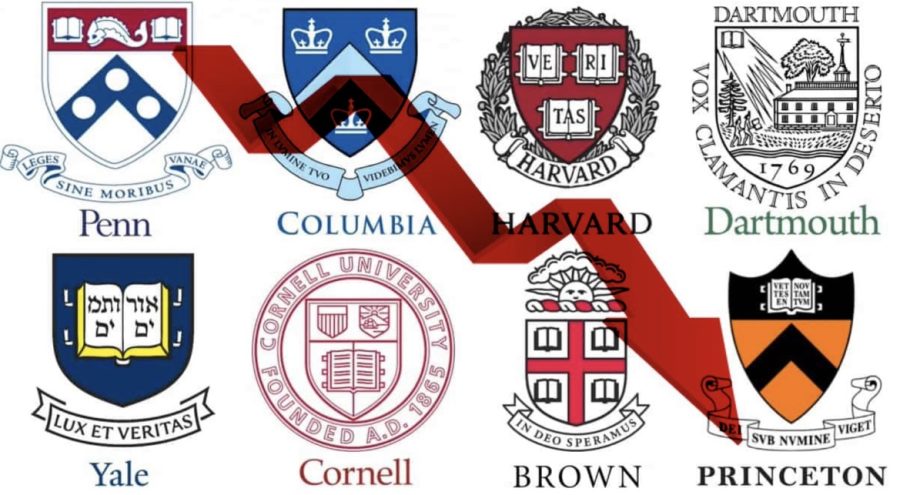
Ivy League and elite universities reported some of the lowest acceptance rates ever recorded, with many falling below 5%. Ivy League Acceptance Rates
The Class of 2025 was one of the largest graduating high school years on record, and the outcome was reflected in the spike in application numbers. Ivy League Acceptance Rates
The intense rivalry is stoking new discussions about the fairness of current admissions procedures and the value of status.

One of the most challenging college admissions rounds in recent memory began for the incoming Class of 2029. In keeping with a trend that has gotten worse over the past ten years, acceptance rates at Ivy League and other prestigious universities fell into the low single digits. Less than 5% of applicants were accepted into universities like Columbia, Yale, and Harvard. The acceptance rate at MIT was only 4.52%. Rice, Duke, and Vanderbilt all recorded new lows. Ivy League Acceptance Rates
These figures represent record-breaking applicant pools for yet another year. Tens of thousands more applications were submitted to some colleges than a few years ago. The number of applications keeps rising as early decision programs gain traction and many universities continue to have test-optional rules.
As part of a larger effort to reduce public pressure about rankings and selectivity, Princeton and Stanford decided not to disclose their admittance rates this year.
But the declining odds have only made applicants and their families more anxious, as they feel pressured to apply to more universities, frequently without knowing what will actually increase their chances.

Testing Policies And Shifting Priorities on Ivy League Acceptance Rates
The Class of 2029 applied under an evolving set of institutional priorities.
While most elite schools kept test-optional policies in place, many applicants opted to submit scores. At Tufts, 65% submitted SAT or ACT scores. At Boston College, that figure was 74%. Some institutions, like MIT and Georgetown, still require scores—and they saw no drop in applicant quality.
More colleges are also focusing on first-generation students, rural applicants, and other forms of socioeconomic diversity. Amherst reported that 25% of admitted students will be the first in their family to attend college. Georgia Tech said 17% of admits are first-generation students, and Brown announced that 19% of its incoming class share this background.

The effect of the Supreme Court’s ruling against race-conscious admissions is still being assessed, but many colleges have added optional essays where students can reflect on how their identity has shaped their lives.
Early Admissions May Give A Strategic Edge on Ivy League Acceptance Rates
One factor helping some students gain a foothold is applying early. Early Decision and Early Action programmes are not only growing in size but are also responsible for a larger share of incoming classes at top schools.
At Dartmouth, the early admit rate was 19.85%, while its overall rate landed at just over 6%. Emory’s early decision rounds accounted for more than half of its incoming class. Brown accepted 17.95% of early applicants, more than triple the rate of those admitted during the regular round.

But this strategy comes with trade-offs. Early Decision is binding, meaning students commit before seeing financial aid offers from other schools. Such an approach can disadvantage lower-income families who need to compare costs. Still, for those who can commit, applying early increasingly looks like a necessary move.
Is Prestige Still Worth It? on Ivy League Acceptance Rates
Behind the numbers, families are grappling with a larger question: Is the stress, cost, and uncertainty of applying to elite schools still worth it?
Many once-safe schools are now just as competitive as traditional elites. NYU received more than 120,000 applications. Notre Dame’s admit rate dropped to 9%, while Rice saw a 13% increase in applicants. At USC, the acceptance rate fell to 10.4%.

As competition rises, so does the importance of school strategy and applicant storytelling. Students are expected to show not just strong academics but also purpose and personality. Many schools now seek applicants with distinctive interests that cross traditional boundaries, whether combining robotics and ethics, or climate science and community organising.
Still, some families are questioning whether the college return on investment justifies the race for top-tier names. With tuition alone exceeding $70,000 per year at many elite schools, some are wondering if it’s worthwhile if they cannot get financial aid. Ivy League Acceptance Rates
For now, the numbers suggest no slowdown. As long as elite college names carry weight in hiring and graduate school admissions, students will continue to apply in record numbers, regardless of how narrow the path becomes.