
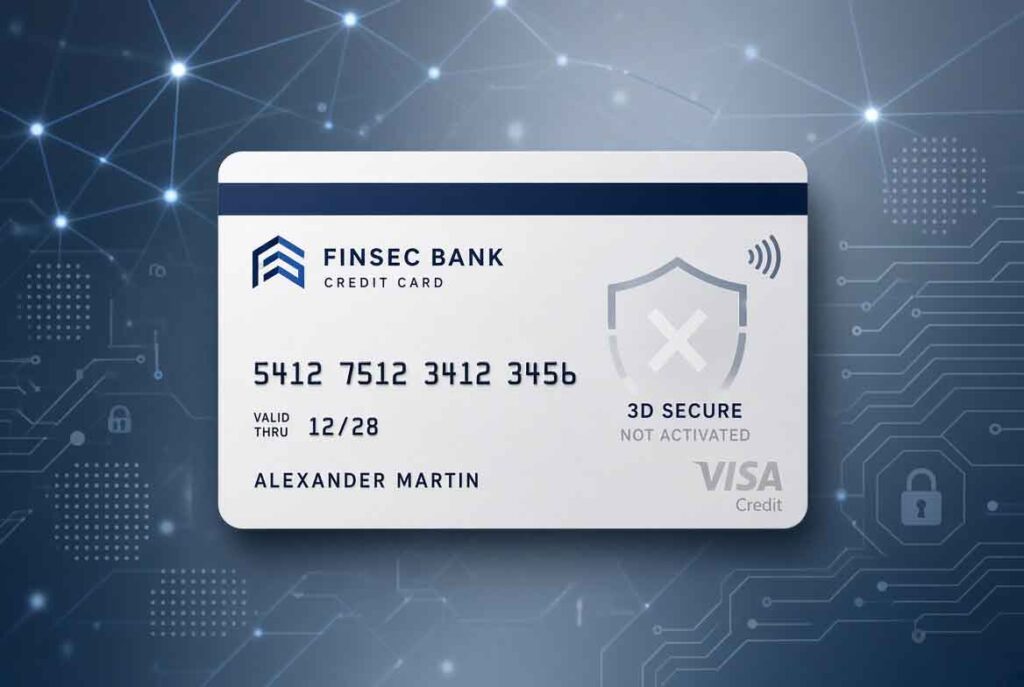
The online payment authentication landscape continues to evolve through 2026. Major banks worldwide have adopted 3D Secure 2.0 and 3.0 protocols, making Verified by Visa (VBV) and Mastercard SecureCode the norm for card-not-present transactions. Yet a meaningful number of issuing institutions — particularly smaller banks, credit unions, and specialized lenders — still process transactions without these authentication layers.
This guide explains what non VBV banks are, why certain institutions choose to remain outside the 3DS framework, how to identify them, and what the future holds. Whether you are new to the concept or seeking updated 2026 information, this resource provides a thorough, practical overview.

Move from lack to abundance 👇👇👇
Get $20k USD Cashapp Transfer Hack Click here
Get $5k USD Paypal Transfer Hack Click here
What Are Non VBV Banks?
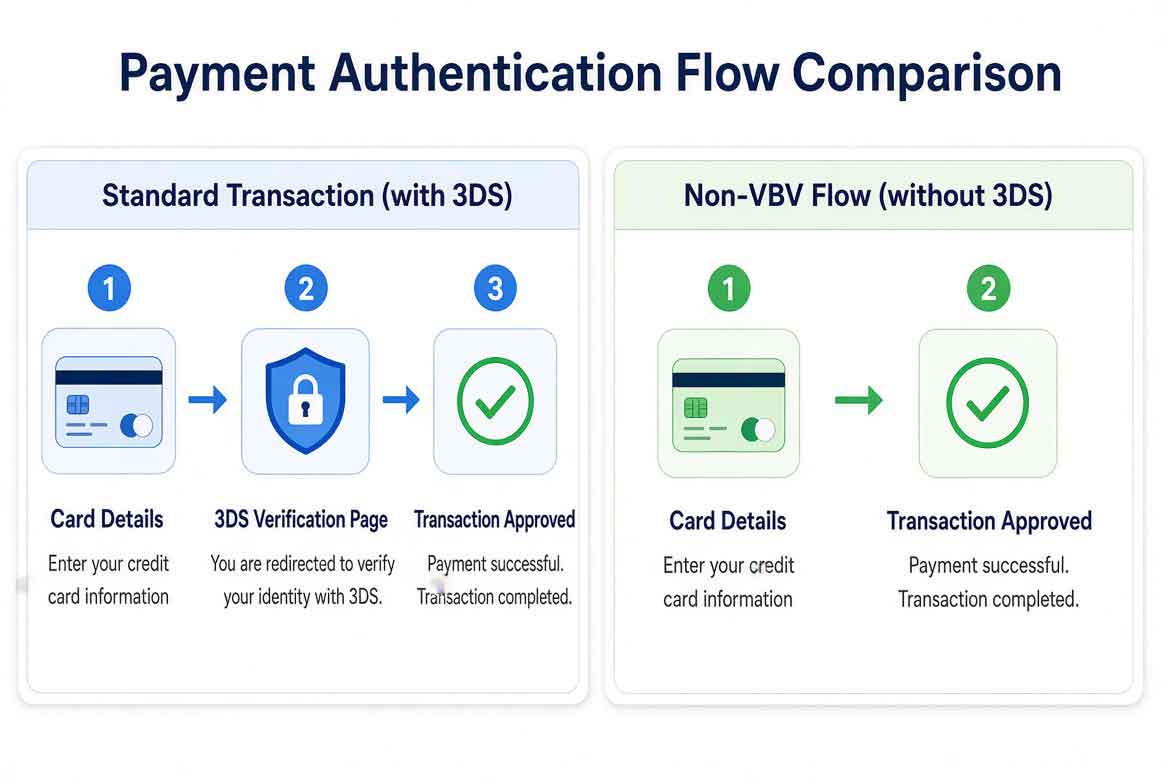
A non VBV bank is any issuing institution that does not require 3D Secure authentication for online card transactions. When a cardholder makes a purchase at a merchant enrolled in the VBV or SecureCode program, a participating bank redirects the customer to a verification page where they must enter a password or a one-time code sent via SMS or app. Non VBV banks skip this step entirely. The transaction proceeds based solely on the card details provided — no redirect, no code entry, no password prompt.
This distinction matters because it affects transaction flow, checkout speed, and the overall payment experience. For certain types of transactions, the absence of this extra layer is precisely what users prefer.
How Non VBV Banks Process Transactions
The mechanics are straightforward. When a transaction is initiated:
- The merchant submits the card details through their payment gateway.
- The gateway checks whether the merchant’s acquiring bank or the card network requires 3D Secure authentication.
- If the issuing bank has not enrolled in the 3DS program, or if the specific card product is exempt, the authentication step is bypassed.
- The transaction is approved or declined based on standard card validation — card number, expiration date, CVV, and available balance or credit limit.
No redirect. No one-time code. No additional verification. The entire process takes seconds and mirrors the experience of a standard card-not-present transaction from previous decades.
What Is a Non VBV Card?
A non VBV card is any credit or debit card issued by a bank that does not participate in 3D Secure. These cards function identically to standard cards in every respect — they have a card number, expiration date, CVV, and can be used at any merchant that accepts their card network. The sole difference is the absence of the authentication step during online checkout.
Non VBV cards are typically issued by smaller financial institutions, credit unions, regional banks, and some prepaid card providers. They are not a separate product category; they are simply standard cards from banks that have opted out of 3DS.
Clarifying the Term “Non VBV Pin”
The term “non VBV pin” often causes confusion, especially for newcomers. A non VBV pin is simply the standard PIN associated with a non VBV card. It is used for ATM withdrawals and PIN-based point-of-sale transactions — it has no direct relationship to the 3D Secure authentication process. The PIN itself does not determine VBV status; the issuing bank’s enrollment in the 3DS program does.
Why Banks Stay Non VBV in 2026
Understanding why certain institutions remain outside the 3D Secure framework requires examining the practical considerations that drive their decisions. Four primary factors explain the persistence of non VBV banks.
Implementation Costs
Upgrading core banking systems to support 3D Secure is expensive. For a community bank serving a few thousand customers, the cost of implementing 3DS — including software licensing, system integration, testing, and ongoing maintenance — can run into hundreds of thousands of dollars. When weighed against the relatively low transaction volumes these institutions process, the return on investment is often unfavorable.
Small banks operate on thin margins. Every dollar spent on technology infrastructure must be justified. For many, the cost of 3DS implementation simply does not make financial sense when their existing systems handle transactions adequately.

Financial Freedom begins with a decision
Get $5k USD Paypal Transfer Hack Click here
Get $10k USD Zelle Transfer Hack Click here
Get $10k USD Venmo Transfer Hack Click here
Customer Experience Priorities
Some banks deliberately avoid 3D Secure to maintain a frictionless checkout experience. The additional authentication step can increase cart abandonment rates and generate customer complaints. Cardholders making small, routine purchases often view the extra verification as an unnecessary annoyance.
Banks that prioritize customer convenience hear this feedback directly. By remaining non VBV, they differentiate themselves from larger institutions and offer a smoother payment experience that some customers actively prefer, particularly for low-value transactions where fraud risk is considered acceptable.
Technical Limitations and Legacy Systems
Many small banks still operate on mainframe and legacy systems built decades ago — systems never designed to support modern authentication protocols. Adding 3D Secure compatibility to these platforms requires extensive customization, if it is technically possible at all.
For banks already planning to retire their legacy infrastructure within the next few years, investing in 3DS compatibility for outdated systems is difficult to justify. The cost and complexity of retrofitting old technology often outweigh the benefits, especially when a full system migration is on the horizon.
Regional Regulatory Differences
The regulatory environment plays a decisive role in 3D Secure adoption rates. In Europe, the Payment Services Directive 2 (PSD2) mandates strong customer authentication for most electronic payments, driving near-universal 3DS implementation. The result is that very few European banks remain non VBV.
In contrast, the United States, Canada, and Australia have less stringent requirements. Banks in these countries have greater flexibility to choose whether to implement 3DS. Consequently, these regions account for the vast majority of non VBV institutions. Regulatory pressure is increasing globally, but the pace of change varies significantly by jurisdiction.

Do not depend on single income; get access to this income source
Get $10k USD Zelle Transfer Hack Click here
Get $20k USD Cashapp Transfer Hack Click here
Types of Non VBV Banks in 2026
Non VBV institutions fall into several distinct categories. Understanding these categories helps identify which banks are most likely to remain outside the 3DS framework.
Regional Credit Unions
Credit unions are among the most common non VBV institutions. These member-owned cooperatives typically operate with smaller budgets and less sophisticated technology than national banks. Many have not implemented 3D Secure because their transaction volumes do not justify the investment. Regional credit unions in the United States, Canada, and Australia are particularly likely to be non VBV.
Credit unions serve specific communities and maintain close relationships with their members. When most transactions occur in person or through familiar channels, the perceived need for advanced online authentication is lower.
Community Banks
Small community banks serving specific towns or regions frequently remain non VBV. These institutions focus on personal relationships and local service rather than cutting-edge digital features. They often rely on core banking platforms that lack 3D Secure capabilities, and upgrading these systems is not a strategic priority.
Community banks form the backbone of rural banking in many countries. Their customers value personal service and local decision-making over digital convenience. For most account holders, the absence of 3DS is not a concern.
Prepaid Card Issuers
Many prepaid card issuers do not implement 3D Secure because their business model emphasizes simplicity and accessibility. Prepaid cards are used by individuals who may not have traditional bank accounts — adding authentication requirements would complicate the user experience and defeat the product’s core purpose.

No Richest man made it at the top as a salary earner. 👇👇
Get $50k USD Money Transfer Hack Click here
Get $20k USD Zelle Transfer Hack Click here
Get $20k USD Paypal Transfer Hack Click here
Prepaid card issuers in the United States and the United Kingdom are particularly likely to be non VBV. The entire value proposition of these cards rests on ease of use, and 3DS runs counter to that objective.
Digital-Only Banks and Neobanks
Some digital-only banks and neobanks have chosen to remain non VBV as part of their value proposition. These institutions emphasize speed and convenience, viewing 3D Secure as an unnecessary barrier to a smooth user experience. However, this is becoming less common as digital banks mature and face increasing regulatory pressure.
Digital banks are built on modern technology, making 3DS implementation technically straightforward. Those that remain non VBV do so by deliberate choice rather than technical limitation, and this stance is increasingly difficult to maintain as regulatory requirements tighten.

How to Identify Non VBV Banks
Identifying non VBV banks requires systematic research and verification. Three primary methods are available, each with different levels of reliability.
BIN Lookup Services
Bank Identification Number (BIN) lookup services maintain databases of issuing institutions and their authentication requirements. By entering the first six digits of a card number, you can determine whether the issuing bank uses 3D Secure. Some services specialize in identifying non VBV BINs and provide regularly updated information.
BIN lookup services offer a quick starting point for research. They provide an initial indication of whether a particular BIN is likely to be non VBV, but their information can become outdated as bank policies change.

Get money from secured source — your family deserves stability
Get $50k USD Money Transfer Hack Click here
Get $20k USD Zelle Transfer Hack Click here
Get $20k USD Paypal Transfer Hack Click here
Transaction Testing
The most reliable method for confirming non VBV status is to test a live transaction. When processing a payment at a merchant that participates in the VBV program, observe whether the checkout process redirects to a verification page. If the transaction completes without this redirect, the bank is non VBV.
For legitimate testing purposes, use small amounts and standard testing procedures. Repeat the test across multiple merchants to confirm consistent results. Some banks may be non VBV for certain merchant categories but not others.
Community Resources
Online communities focused on payment systems maintain lists of confirmed non VBV BINs and discuss which institutions currently bypass 3DS. These resources can provide valuable leads, but information should always be verified independently. Bank policies change without notice, and community-sourced information may be outdated or inaccurate.
Use community resources as a starting point for investigation, not as definitive proof. Cross-reference information from multiple sources before drawing conclusions.
How to Test Non VBV BINs
Testing a non VBV BIN requires a systematic approach. Follow these steps for reliable results.
Step 1: Obtain a Valid BIN. Start with a BIN from a bank you suspect is non VBV. Use lookup services, community resources, or verified databases. Ensure the BIN is active and belongs to an issuing institution in your target region.
Freedom comes from having access to the right funding 👇👇
Get $50k USD Zelle Transfer Hack Click here
Get $50k USD Paypal Transfer Hack Click here
Get $20k USD Western union Transfer Hack Click here
Step 2: Prepare Test Transaction Details. You need a full set of card details — card number, expiration date, and CVV — that correspond to the BIN you are investigating.
Step 3: Initiate a Test Transaction. Use a merchant site that participates in the VBV or SecureCode program. Enter the card details and proceed to checkout. Observe whether the system redirects you to a verification page.
Step 4: Verify Results. Repeat the test multiple times with different merchants. Consistent results across multiple tests provide confidence in your findings. Some banks may be non VBV for specific merchant categories only.

Take charge over finances 
Get $5k USD Paypal Transfer Hack Click here
Get $10k USD Zelle Transfer Hack Click here
Get $10k USD Venmo Transfer Hack Click here
Testing is straightforward but requires patience. Take the time to verify thoroughly before relying on any single result.
Frequently Asked Questions
What is a non VBV BIN? A non VBV BIN is a Bank Identification Number (the first six digits of a card number) that corresponds to an issuing institution that does not use 3D Secure authentication. Transactions using these BINs do not require additional verification.
How do non VBV BINs differ from standard BINs? Standard BINs belong to banks that have implemented 3D Secure. Transactions with standard BINs require the cardholder to complete an authentication step. Non VBV BINs bypass this requirement entirely.

Hardwork don’t make you rich; strategy does
Get $5k USD Paypal Transfer Hack Click here
Get $10k USD Zelle Transfer Hack Click here
Get $10k USD Venmo Transfer Hack Click here
Are non VBV banks legal? Yes. Non VBV banks operate legally within the regulatory frameworks of their respective countries. The decision to implement 3D Secure is voluntary in many jurisdictions. However, using stolen card details with any bank — non VBV or otherwise — is illegal in all jurisdictions.
Which countries have the most non VBV banks? The United States, Canada, and Australia have higher proportions of non VBV banks compared to Europe and the United Kingdom, due to less stringent authentication requirements in those markets.
Will non VBV banks disappear? The number of non VBV banks is decreasing as more institutions adopt 3D Secure, but small banks and credit unions will likely remain non VBV for several more years. The trend is toward universal adoption, but the pace varies by region and institution type.
Where to Get Cards With Verified Non VBV BINs
Finding cards with verified Non VBV BINs is the most important step. You need vendors who test their cards before selling them.
The following trusted vendors provide cards with verified Non VBV BINs:
- Vladfox.com offers cards, RDPs, and SOCKS5 bundles. Their card inventory is regularly updated with live tested BINs. They focus on quality over quantity, meaning every card they sell has been verified for usability.
- Worlddumps.site provides pre configured anti detect profiles with CCs. This is useful if you want a complete setup rather than just cards. Their profiles include browser fingerprints, proxy configurations, and cards matched to the right BINs.
- Buyccfullz.site has an integrated checker so you can verify the card yourself before using it. They also offer prepaid cards and detailed guides for beginners.
Conclusion
Non VBV banks remain a significant part of the global payment ecosystem in 2026. Small banks, credit unions, prepaid card issuers, and some digital-only institutions continue to process transactions without 3D Secure authentication, driven by cost considerations, customer preferences, technical limitations, and regional regulatory differences.
Understanding why these banks stay non VBV, how to identify them, and how to test their BINs is essential knowledge for anyone working with payment systems. As the industry continues its gradual shift toward universal 3DS adoption, the number of non VBV institutions will decline, but opportunities for identification and verification will persist for those who understand the landscape.
The key insight for 2026 is that non VBV banking is not disappearing — it is becoming more specialized. Knowing where to look and how to verify is essential for anyone operating in this space.