
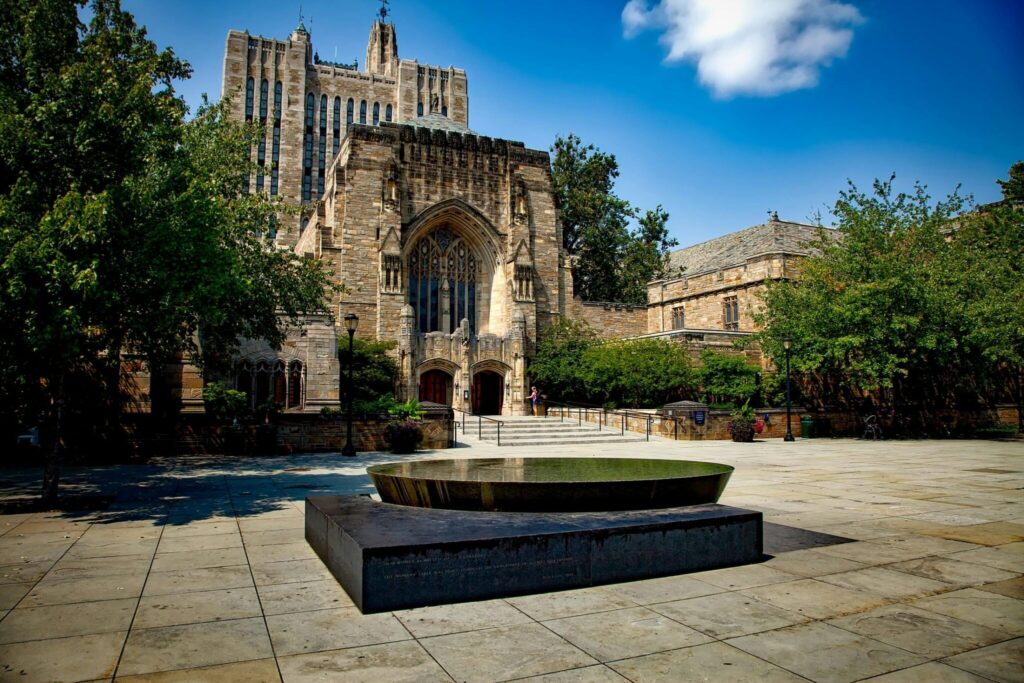
IvyPlus colleges may enrol just a handful of U.S. students, but their influence stretches far beyond their campuses. The Outsized Impact Of Ivy Plus Colleges
Their graduates run Fortune 500 companies, lead groundbreaking research, and shape government policy. From Nobel Prize winners to tech founders, these institutions consistently produce high-profile leaders.

Move from lack to abundance 👇👇👇
Get $20k USD Cashapp Transfer Hack Click here
Get $5k USD Paypal Transfer Hack Click here
But with public confidence in higher education slipping, do the Ivy League and Ivy Plus schools still deserve their elite reputation? The Outsized Impact Of Ivy Plus Colleges
What Are The Ivy Plus Colleges?
The Ivy League started as an athletic conference but has become synonymous with elite higher education. It comprises a group of eight prestigious and very selective colleges.
- Brown University
- Columbia University
- Cornell University
- Dartmouth College
- Harvard University
- Princeton University
- University of Pennsylvania
- Yale University
The Ivy Plus colleges include the Ivy League colleges, plus several additional high-quality colleges that have strong reputations for academic and research excellence. The Outsized Impact Of Ivy Plus Colleges
- Massachusetts Institute of Technology (MIT)
- Stanford University
- Duke University
- University of Chicago
An additional three colleges are sometimes included in the definition of Ivy Plus colleges, and sometimes not.
- California Institute of Technology (Caltech)
- Northwestern University
- Johns Hopkins
Related: Most Expensive Colleges In America
Enrollment And Selectivity
Despite their prominence, IvyPlus colleges enrol a relatively small number of students. According to the Integrated Postsecondary Education Data System (IPEDS), these institutions make up just 0.6% of all 4-year colleges and enrol approximately 114,000 undergraduate students—only 1% of the total undergraduate population. The Outsized Impact Of Ivy Plus Colleges
These institutions are among the most selective in the nation, admitting fewer than 10% of applicants (5.5% in 2023).
In contrast, the overall acceptance rate among all four-year colleges is 58%. Additionally, IvyPlus schools see a significantly higher enrolment yield, with two-thirds of admitted students choosing to attend, compared to just 21% at other institutions. The Outsized Impact Of Ivy Plus Colleges
Related: Undermatching: Why Smart Low-Income Students Don’t Enroll in Selective Colleges
Socioeconomic Representation
While Ivy Plus colleges are renowned for their financial aid policies, they enrol a disproportionately small number of low-income students. According to the FSA Data Center, these institutions account for only:
- 0.3% of Pell Grant Recipients
- 0.2% of undergraduate Federal Direct Student Loan borrowers
- 0.5% of Federal Direct Parent PLUS borrowers
Many Ivy Plus colleges offer “no-loan” financial aid packages that replace loans with grants, reducing student debt burdens. Despite this, their student body remains skewed toward higher-income backgrounds.
Long-Term Outcomes
Graduates of Ivy Plus colleges tend to experience significant economic advantages. Data from the College Scorecard indicates that the median income of Ivy Plus graduates 10 years after enrolment is more than double that of other college graduates. The Outsized Impact Of Ivy Plus Colleges
Furthermore, Ivy Plus institutions consistently rank among the top universities globally. In the 2025 Times Higher Education World University Rankings and the QS World University Rankings, 14 Ivy Plus colleges were included in the top 100. The Outsized Impact Of Ivy Plus Colleges
Contributions Of Ivy Plus Universities
Ivy Plus institutions have had an outsized impact on innovation, business, government, and culture. Some key statistics include:
- 19% of U.S.-born tech founders attended Ivy Plus colleges.
- More than 10% of Fortune 500 CEOs are Ivy Plus alumni
- Nearly a quarter (22%) of Nobel Laureates have ties to Ivy Plus colleges
- More than a quarter (28%) of MacArthur “Genius Grant” recipients are Ivy Plus graduates
- Almost half (48%) of Rhodes Scholars studied at Ivy Plus colleges.
- A quarter of U.S. Senators are alumni of Ivy Plus colleges, especially Harvard and Yale.
- Nearly 42% of U.S. Presidents since 1961 are alumni of Ivy Plus colleges
- More than two-thirds (71%) of U.S. Supreme Court Justices since 1967 attended Ivy Plus colleges.
These statistics suggest that Ivy Plus graduates are significantly over-represented in leadership roles across multiple sectors. The Outsized Impact Of Ivy Plus Colleges
For example, tech company founders and Nobel laureates are 25 times more likely to come from an Ivy Plus college than from other institutions. The Outsized Impact Of Ivy Plus Colleges
Public Perception And Confidence
Public confidence in higher education has declined recently, but Ivy Plus colleges continue to enjoy relatively strong public trust. A Gallup survey found that:
- Two-thirds (68%) of respondents have at least some confidence in higher education.
- One-third (32%) lack confidence in higher education.
These numbers are similar to our recent poll on Americans’ perception of the value of college in 2025.
While scepticism about higher education is rising, IvyPlus colleges remain a benchmark for academic and professional success.
Conclusion on The Outsized Impact Of Ivy Plus Colleges
Ivy Plus colleges have an outsized influence on the workforce, politics, and scientific progress. Despite enrolling only a small percentage of students, their alumni disproportionately rise to leadership positions and contribute significantly to the scientific, engineering, and medical fields.
Their impact extends far beyond their campuses, shaping conversations on higher education, socioeconomic success, and institutional prestige. The Outsized Impact Of Ivy Plus Colleges